Choosing the Best Cup for Babies and Toddlers: Why Open Cups and Straw Cups Support Healthy Development
If you have ever stood in the feeding aisle staring at shelves of cups, wondering which one your child actually needs, you are not alone. Between sippy cups, straw cups, training cups, and “no spill” everything, the options can feel overwhelming. This post breaks down what truly matters for your child’s feeding and oral development so you can make a choice that supports their growth instead of working against it.
Before I became an infant feeding specialist, I grabbed whatever cup promised the least mess. Once I began working with babies and toddlers every day, the patterns became impossible to ignore. The cup you choose really can shape your child’s swallow pattern, tongue posture, oral motor development, and even their feeding confidence. Luckily, the best options are simple.
Why Open Cups and Straw Cups Are Best for Your Child’s Oral and Feeding Development
Choosing the right cup is not just about convenience. Cup selection directly affects how your child uses their tongue, lips, cheeks, and jaw. These muscle patterns influence swallowing, chewing, speech, and overall oral development. Below is a deeper look at why open cups and straw cups rise above the rest and how they set your little one up for long-term success.
What Happens When Babies Use Sippy Cups
Sippy cups are popular because they keep floors dry and cars clean. The problem is not the spill-proof feature but the mechanics required to drink from them. Most sippy cups position the spout on the front of the mouth and encourage a forward tongue movement. It looks subtle from the outside, but inside the mouth, the swallow pattern becomes more like a thrust. This is the same pattern babies use as newborns, so the sippy cup keeps them stuck in an immature swallowing stage.
When you know there is a better option, it makes sense to consider choosing it. You can try this yourself. Sip from a hard-spouted sippy cup or a water bottle with a stiff spout. Notice that your tongue often pushes forward to get the liquid out. That forward pressure is exactly what babies repeat over and over when using sippy cups.
Why Open Cups Are a Developmental Powerhouse
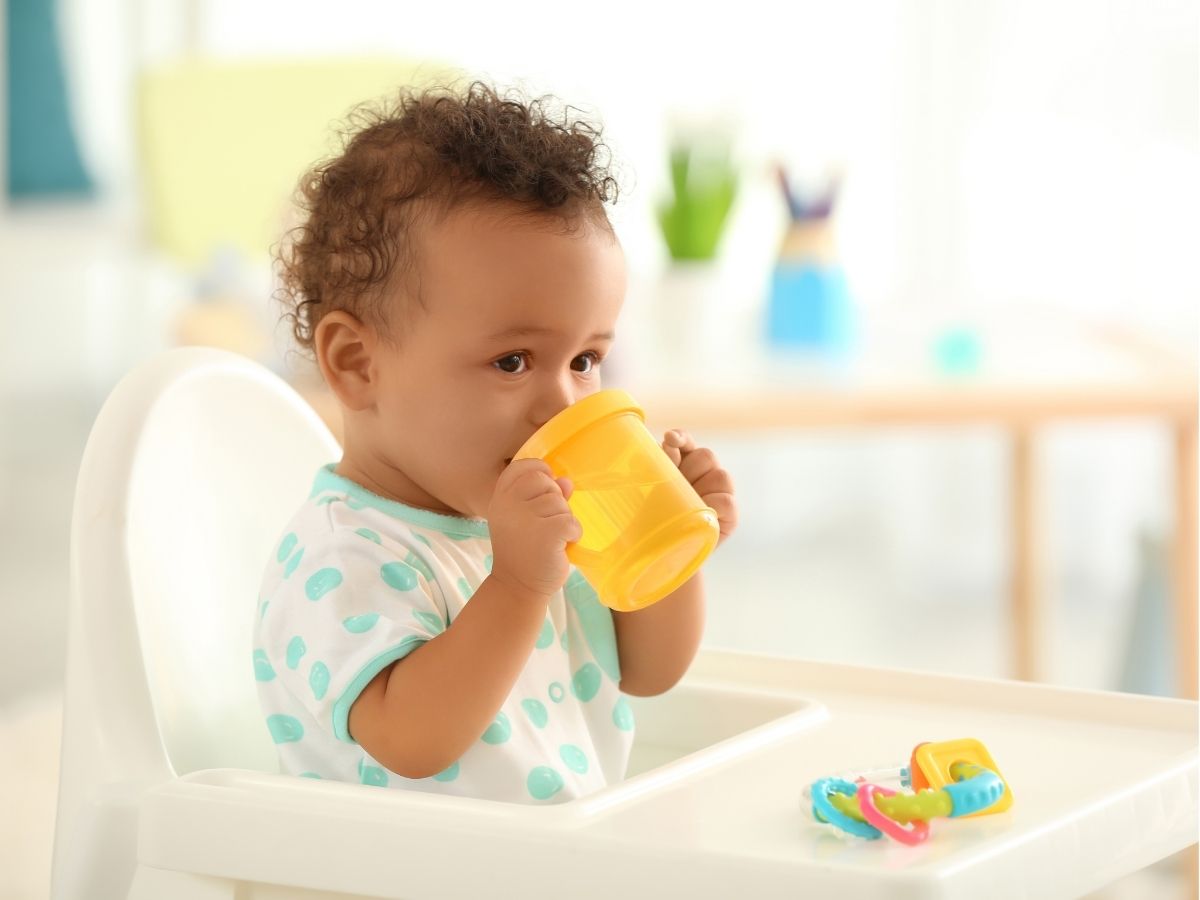
Open cups support the swallowing pattern babies are meant to develop as they begin solids. Starting around six months, babies are ready to practice a more mature swallow. When drinking from an open cup, the tongue stays inside the mouth and lifts gently instead of pushing forward. This is the foundation for proper oral posture.
Open cups offer more benefits too.
- They strengthen hand-to-mouth coordination.
- They help children learn pacing and volume control.
- They strengthen lip closure and jaw stability.
- They mimic the movement pattern children will use for the rest of their lives.
Even tiny sips count. The goal is exposure and practice, not perfection.
Why Straw Cups Support a Healthy, Mature Swallow
Straw drinking encourages your child’s tongue to retract and stabilize rather than push forward. The lips, cheeks, and jaw all work together in a way that supports feeding skill development. Just like open cups, straw cups promote the same swallow pattern used for eating solids and drinking from traditional cups later on.
Straw cups support:
- Better lip strength
- Improved cheek activation
- Increased tongue retraction
- A more coordinated swallow
- A safer progression for drinking on the go
One of the biggest advantages is that straw cups allow independence without compromising development. This makes them a great option for daycare, car rides, restaurants, and daily routines.
What Parents Really Need: A Simple Cup Progression
The good news is that your child does not need a cabinet full of specialty cups. Two types cover everything your child needs: open cups and straw cups. Together, they support healthy oral motor development without complicating your feeding routine.
Below is a simple progression you can use.
Start offering open cup practice around six months
Babies do not need to master the skill. Holding the cup for them and offering tiny sips is enough. Over time, they learn how to manage flow, tilt, and pace.
Add straw drinking by six to nine months
You can teach this easily with a short straw, a small amount of water or breast milk, and gentle support. Babies usually catch on quickly.
Use sippy cups only as occasional tools, not daily go-tos
They are not harmful in isolated moments. They are simply not the best choice for consistent use. If you keep one in the diaper bag for emergencies, that is completely fine.
Why These Cup Choices Matter Long Term
Cup choice is a small daily decision that adds up over time. Repetition is what shapes oral motor patterns. When children use the right tools during the months their feeding skills are forming, you get benefits that carry forward for years.
FAQs Parents Ask About Cups
1. When should I introduce an open cup?
Around six months is a great time to start. This lines up with the age most babies begin solids. You do not need to wait for readiness beyond that. Tiny sips with full support are perfect at this stage.
2. What about leak-proof straw cups? Are they okay?
Leak-proof straw cups are fine, but many require strong suction, which makes drinking harder. Look for options where your child can get liquid without collapsing their cheeks or working too hard.
3. Will open cup drinking cause choking?
Open cups are actually very safe when introduced with support. You control the amount and help pace the sip. Babies do not need more than a teaspoon or two at first. Practice builds skill quickly.